Detect and track
One person, one track.
Faces are found and followed through motion, occlusion and changing viewpoints, so each person is handled as a sequence.

Synthetic face replacement for video that needs to stay useful. Built around identity suppression, temporal consistency and retained analytical signals.

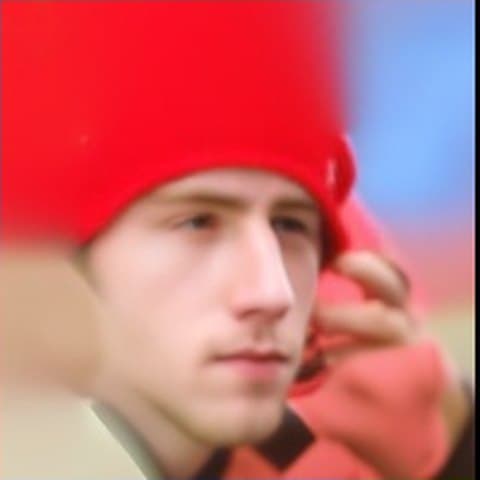 SourceResult
A blurred face hides who someone is, and also where they are looking, how their head is turned and how they are moving. Synthetic replacement aims to remove only the identity.
Blur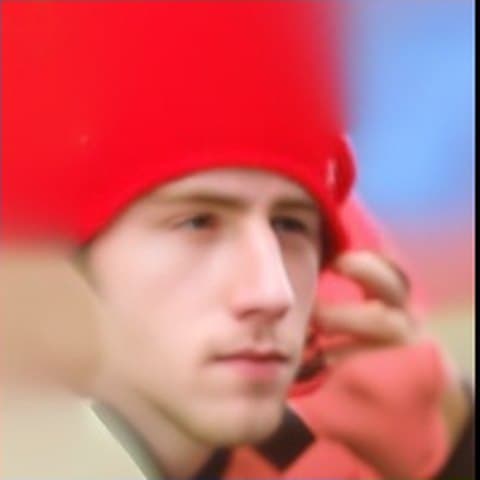 Synthetic
Three stages, each with its own evaluation. The research challenge is balancing them.
Faces are found and followed through motion, occlusion and changing viewpoints, so each person is handled as a sequence.
A synthetic face is generated and kept stable for the whole track, so there is no frame-to-frame flicker between identities.
Recognition suppression is measured alongside pose, gaze and downstream detection on the same footage.

Facilities and public spaces, mobility fleets, transit operators, event production and video archives.
# Planned live ingestion
aynvia stream \
  --engine faceanon \
  --in  rtsp://10.0.4.12/cam-07 \
  --out rtsp://0.0.0.0:8554/cam-07-anon
These are the numbers we are working toward. None of them is a published result or a customer guarantee.
Not yet. FaceAnon is in development. Requesting access helps us understand your evaluation needs; it does not give immediate product access.
No. Replacing a face is one part of a privacy workflow. Clothing, gait, location, metadata and context can still identify someone, and replacement alone does not establish legal compliance.
Blur and pixelation remove the signals that analysis depends on, such as where someone is looking and how their head is turned. Synthetic replacement aims to keep those signals while removing the identity.
The plan is live RTSP ingestion for cameras and fleets, a batch REST API for archives, and a Python SDK for data pipelines. All three are planned interfaces.
Tell us what you need to protect, extract or inspect. We'll tell you honestly whether our engines can help yet.