Ten development tests. Hover or tap a frame to see the original it was made from.
FaceAnon research preview
Useful vision. Accountable AI.
Vision engines that de-identify faces in video, extract fine detail, and flag where reconstruction becomes guesswork.
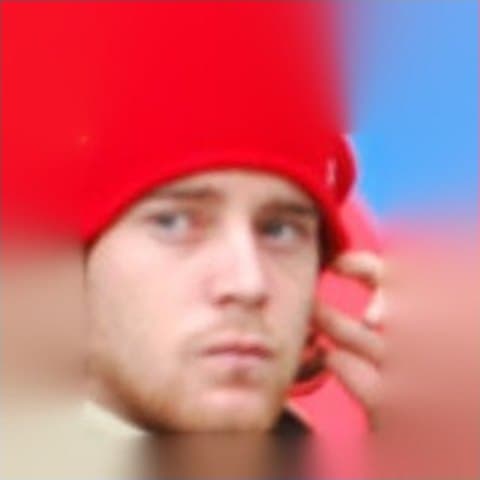
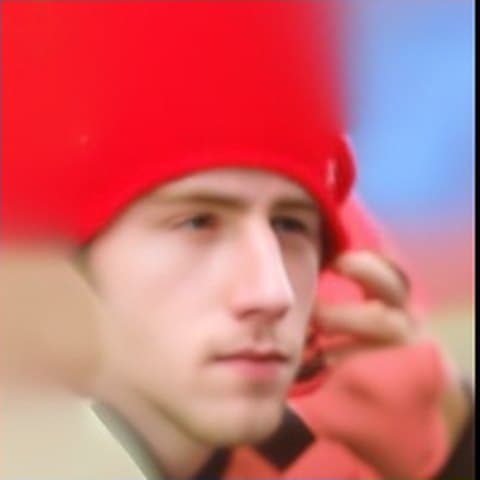 SourceResult
FaceAnon workbenchIn development
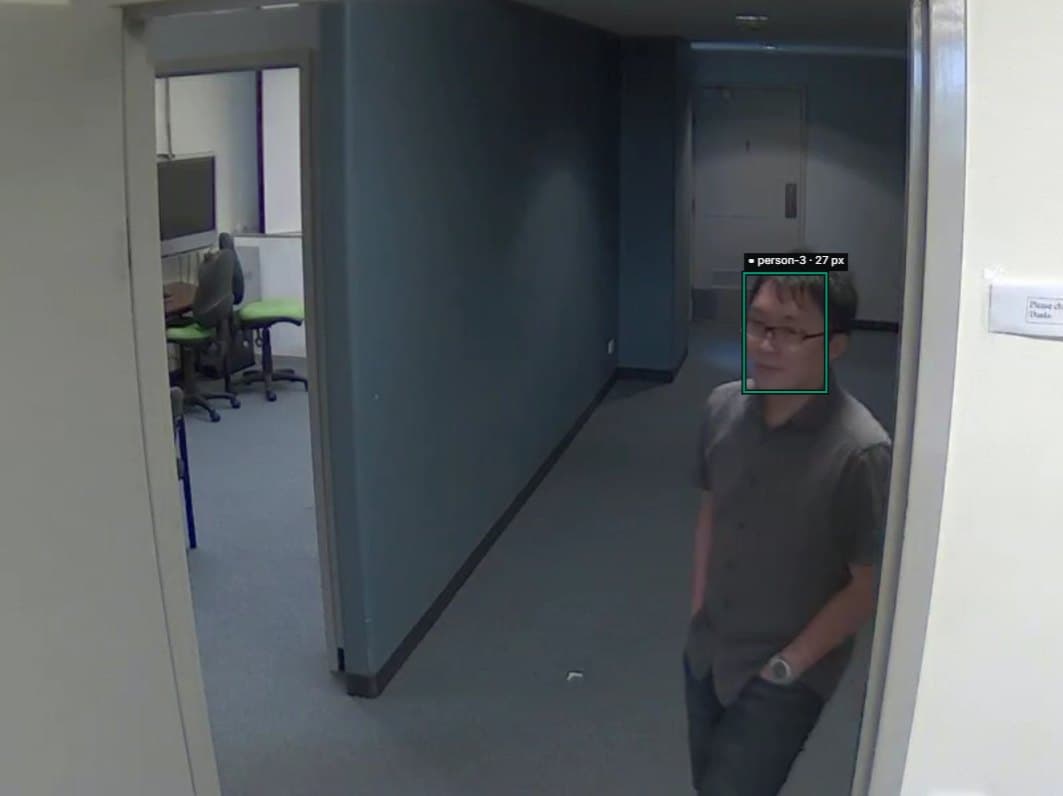
Synthetic face replacement. Each face is swapped for a generated one, while head pose, gaze direction and lighting stay as they were.
- Kept
- Head pose, gaze direction, lighting
- Changed
- Facial identity
- Status
- Supplied development test. Not independently validated.
Interface concept using supplied development test pairs. Not independently validated.
Built for teams that handle sensitive footage
Smart-city camerasFleet dashcamsPublic transitEvent productionFashion e-commercePost-productionSecurity auditVideo archives
Blur hides who someone is, and also where they're looking and how they move. We replace the face instead, so the rest of the footage stays useful.
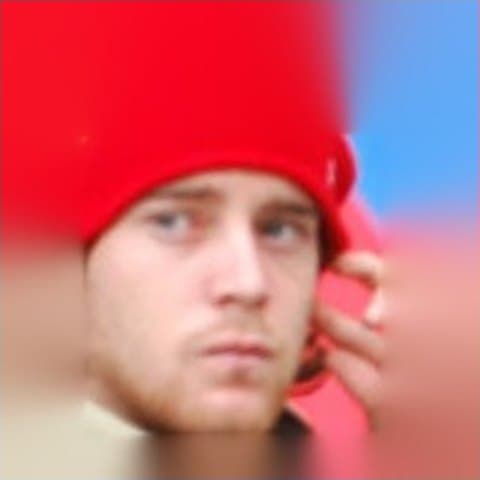
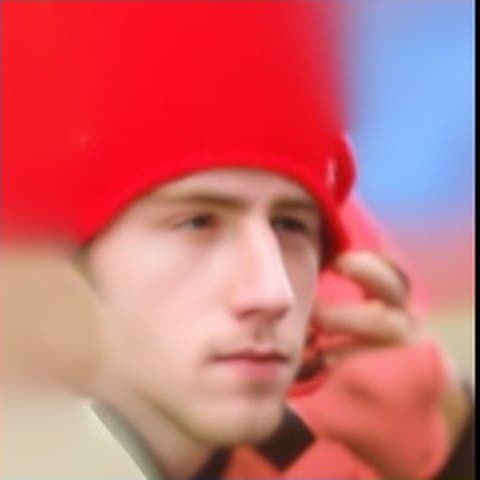
Detect and track
Find every face, in every frame.
Faces are followed through motion, occlusion and changing light, so each person is handled as one track instead of thousands of stills.
Release the identity
Let go of who it was.
Pose, gaze and lighting are measured first and kept. The features a recognition system would match on are discarded.
Rebuild consistently
Someone new, frame after frame.
A synthetic identity is rendered back into the scene and held stable for the whole track, so analysis downstream still works.
Pose and gaze kept. Downstream systems still see where people are looking.
Axes drawn for illustration.
Stream, batch or SDK. Put it where the footage already flows.
# Planned Python SDK
from aynvia import FaceAnon

FaceAnon().process(
    source="s3://archive/platform-4.mp4",
    keep=["pose", "gaze"],
)
Planned interface
What it doesn't claim. You should know the limits up front.
- Replacing a face does not, by itself, make footage legally compliant.
- Gait, clothing, tattoos and context can still identify someone.
- Identity-suppression targets are research goals until we publish the evaluation.
Applied Vision
A finer level of control.
In researchNeural matting
Edges, down to the thread.
Separate subjects and garments from any background without a green screen, then retouch fabric at catalogue scale.
Drag across the image. The blue layer is an edge map computed live in your browser, a simple stand-in for what the matting model refines.
PhotoEdgesIn researchForensic super-resolution
Sharper is not proof.
Enhance degraded CCTV, and mark every region where the model may be inventing detail instead of recovering it.
 Needs review
Plugs into the pipeline you have.
In
Your footage
- RTSP / CCTV
- Archives
- Buckets
aynvia
FaceAnon · Matting · Super-resolution
Out
Your systems
- VMS
- Data lake
- DAM
Four ways in. Live streams, batch jobs, a Python SDK and a local CLI for studios. All four are planned while the engines are in development.
PlannedIntegration plans# Planned live ingestion aynvia stream \ --engine faceanon \ --in rtsp://10.0.4.12/cam-07 \ --out rtsp://0.0.0.0:8554/cam-07-anon
Where each engine stands.
We move a marker only when the evaluation behind it is published.
Research
MattingSuper-resolution
Prototype
FaceAnon
Evaluation
Early access
Available
Bring us your hardest footage.
Tell us what you need to protect, extract or inspect. We'll tell you honestly whether our engines can help yet.